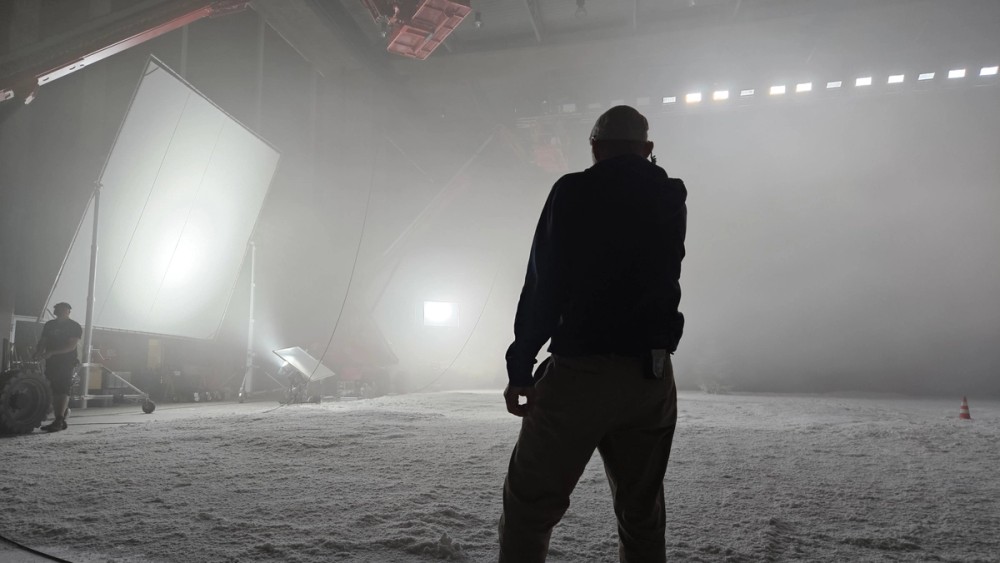
When Nine Perfect Strangers returned for its second season, the production underwent a dramatic visual shift. Leaving behind the eucalyptus forests of Australia, the story moved into the snow-covered elegance of the European Alps. With it came a new aesthetic—less grounded naturalism, more stylised psychological tension.
At the heart of that transformation were cinematographer Frank Lamm and gaffer Uwe Greiner. Together, they built a lighting language that was intimate, mobile, and often surreal—designed to support memory, emotion, and mental fracture as much as physical space.
Working with a compact but powerful lighting package built largely around Aputure fixtures, Greiner turned logistical constraints into creative advantages. From heritage castles to remote forests, the tools allowed the team to stay flexible while maintaining a consistent, high-end cinematic look.
Versatility in Every Frame
One of Greiner’s biggest advantages on Nine Perfect Strangers was wireless, battery-powered lighting that could function both as motivated practicals and controllable film lights.
“The B7Cs and MC Pros were lifesavers in locations where running cable wasn’t an option.”
Inside Blühnbach Castle—one of the show’s primary locations—visible cabling was strictly prohibited. Greiner replaced practical bulbs in sconces and decorative fixtures with Aputure B7C smart bulbs, preserving period-accurate warmth while gaining full wireless control. Outdoors, more than 30 MC Pros were distributed throughout the castle gardens, allowing the lighting team to shape night exteriors without disturbing protected architecture.
“You can’t pull power lines through a listed garden,” Greiner explains. “But you still need a nightscape that reads on camera and feels coherent.”
Meanwhile, the LS 600c became a dependable workhorse. Used to bounce into large overhead frames, push light through windows, or serve as a strong key, it offered both punch and precise colour control. “The output, colour quality, and accessory ecosystem made it incredibly adaptable,” Greiner says. “That flexibility matters when schedules and locations keep shifting.”
Shaping Sun and Moon With the XT26
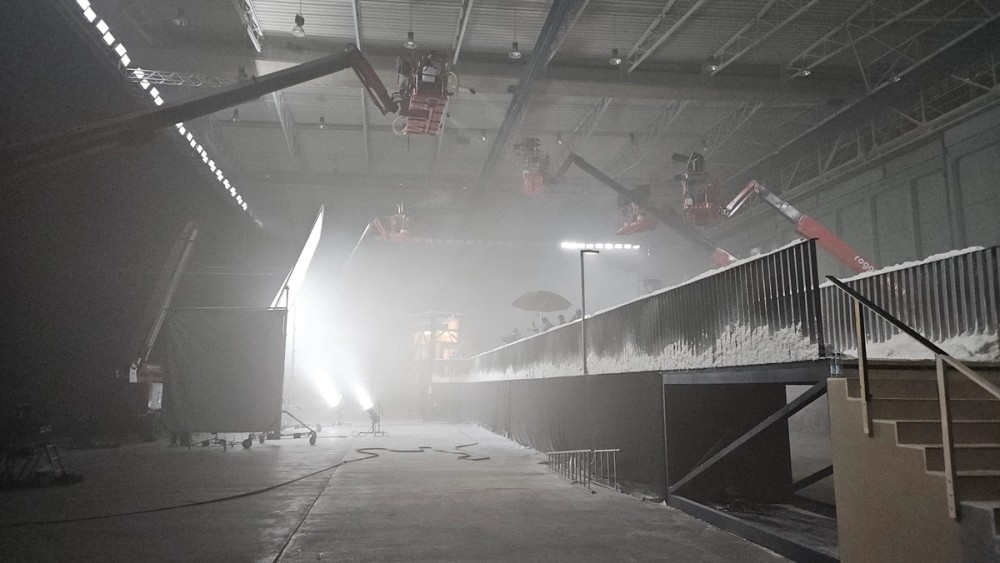
Electro Storm XT26s on set. Image courtesy of Uwe Greiner.
The Electro Storm XT26 became Greiner’s most dynamic tool on set. In studio interiors dressed with Soft Drops, the XT26—placed just behind the printed backdrops—simulated hard alpine sunlight filtering through overcast skies. Its wide Fresnel allowed light to pass cleanly through the material while keeping the fixture itself hidden, producing natural roll-off without clipping or artefacts.
Later, the same unit was stripped to open-face mode and repurposed as harsh moonlight for stylised night scenes. After testing, DP Frank Lamm dropped a planned 10K tungsten setup entirely—the XT26 delivered comparable intensity with less weight, faster setup, and battery capability.
One of Greiner’s most inventive moments came during a ballroom scene that shifted from restrained tension to emotional chaos. Three XT26s fitted with Spotlight Max projectors were initially bounced for soft, ambient light. As the scene escalated, the fixtures were manually rotated into tight, hard-edged beams—transforming atmosphere into something closer to concert lighting, live on camera.
One of Greiner’s most inventive moments came during a ballroom scene that shifted from restrained tension to emotional chaos. Three XT26s fitted with Spotlight Max projectors were initially bounced for soft, ambient light. As the scene escalated, the fixtures were manually rotated into tight, hard-edged beams—transforming atmosphere into something closer to concert lighting, live on camera.
“Suddenly the lighting became part of the choreography,” Greiner says. “It could follow the emotional beats in real time.”
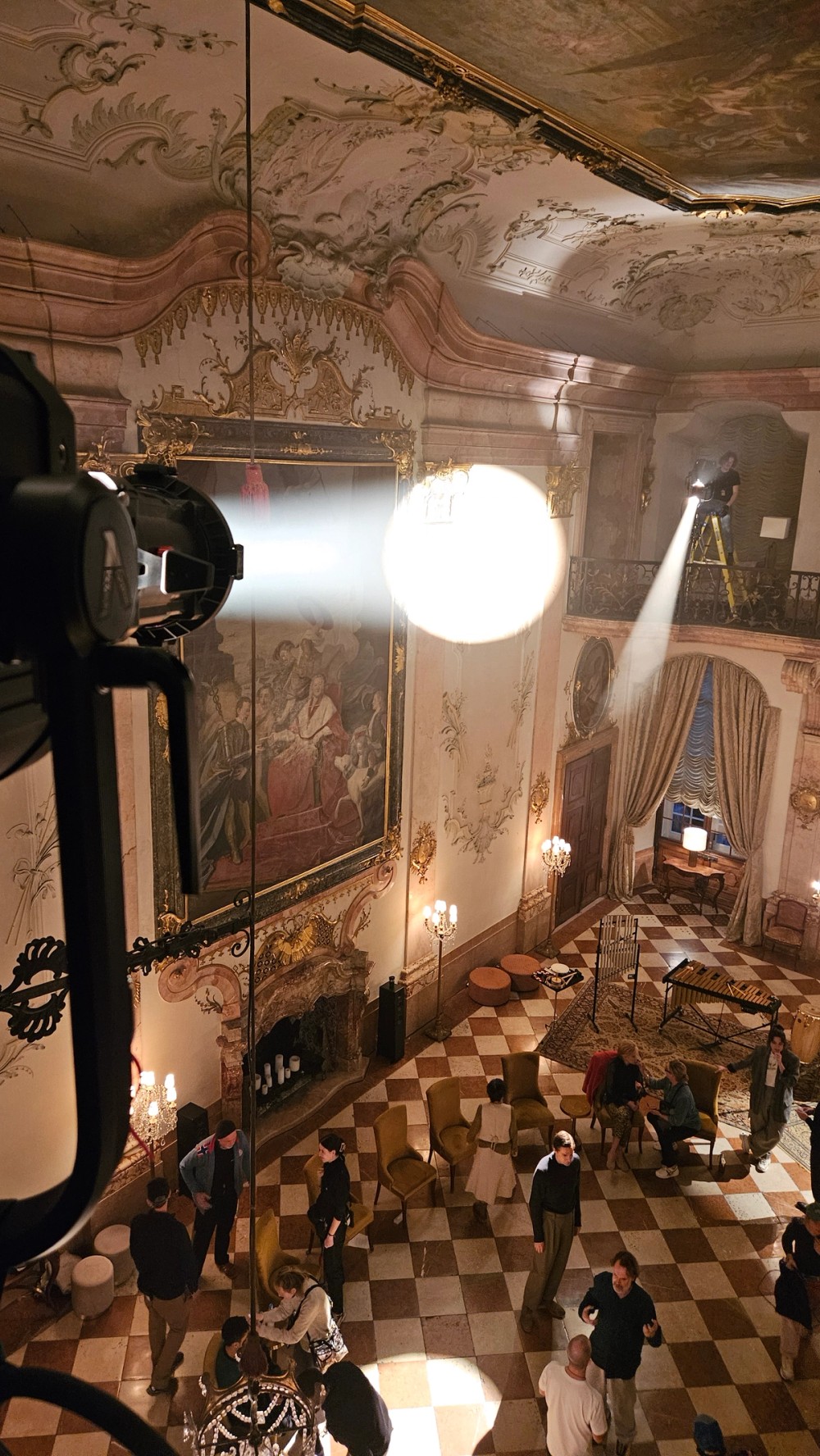
Three XT26s fitted with Spotlight Max projectors. Image courtesy of Uwe Greiner.
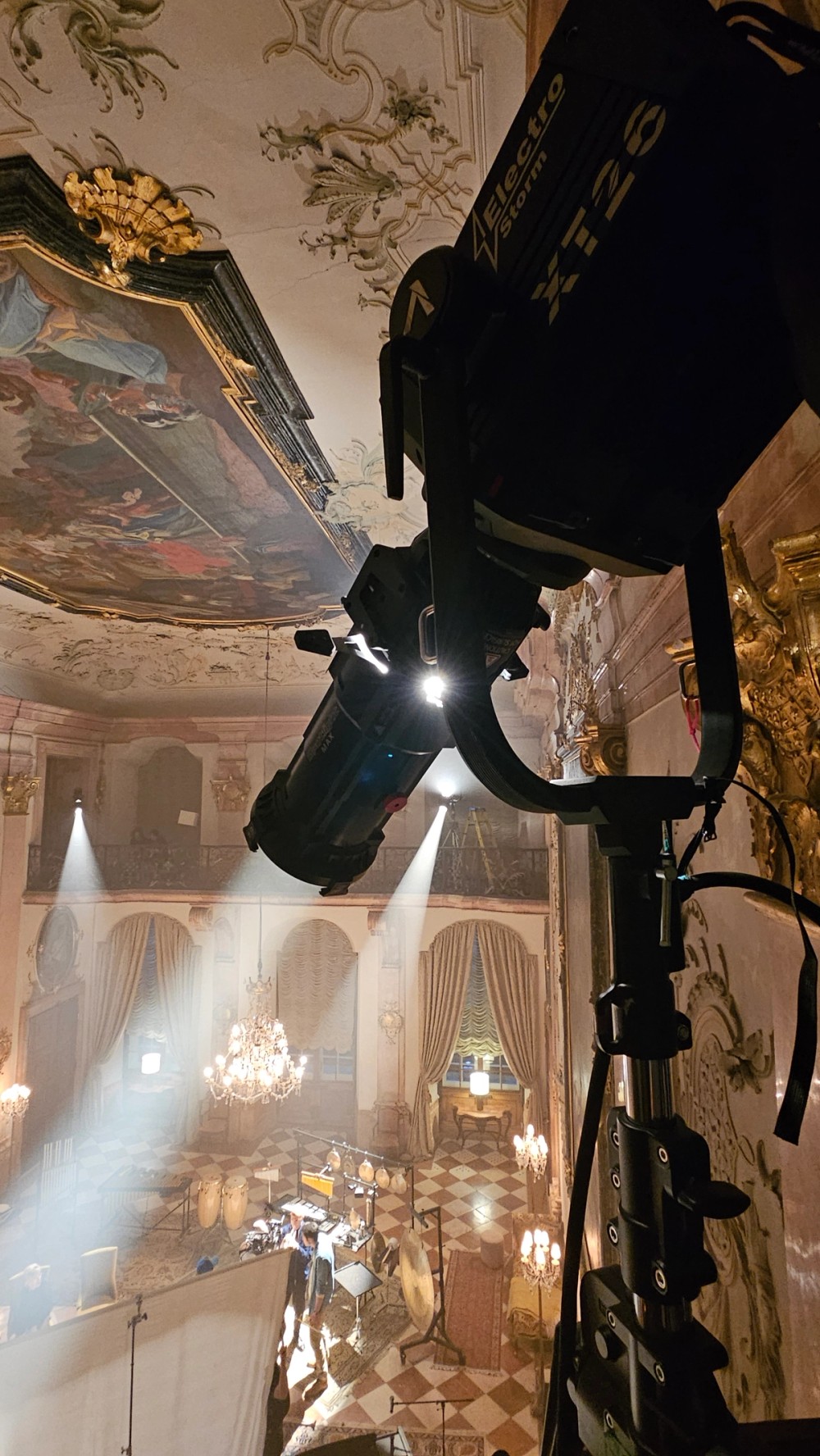
Three XT26s fitted with Spotlight Max projectors. Image courtesy of Uwe Greiner.
Battery Power as a Creative Safety Net
“When the generator is gone and the grid’s been cut, battery lights save the day.”
Remote locations inevitably brought surprises. In one instance, the crew returned to a remote car setup to shoot a close-up of Nicole Kidman—only to discover that the generator and all mains power had already been removed. With no time to re-rig, Greiner powered an XT26 via battery and saved the shot.
Battery-powered fixtures also enabled fast, fluid shooting in forest locations. Greiner applied a similar approach on another feature, The Weight, lighting deep-woods campfire scenes with battery-powered Aputure 600cs placed behind actors to extend natural firelight. Tubes added depth between trees, allowing 180-degree resets in under five minutes and preserving performance continuity.
Letting the Light Be Seen—Not the Fixture
“Sometimes the best trick is letting the light exist in frame—without revealing where it comes from.”
Thanks to the XT26’s CF12 Compact Fresnel being larger than the fixture body itself, Greiner could frame the beam as a visible sun source while keeping the unit hidden behind its own lens and rigging. In other setups, the XT26 was bounced into muslin or white curtains to create soft, wraparound fill—ideal for ornate interiors with limited rigging options.
Its wide flood allowed the fixture to sit closer to bounce surfaces than traditional HMIs or tungsten units, enabling compact builds that could be adjusted quickly throughout the day.
Engineering Light for Camera Movement
A key bedroom scene required a 180-degree dolly move around Nicole Kidman. To maintain consistent backlight without revealing sources, Greiner rigged three LS 600cs in sequence, bouncing them into muslin around the set. As the camera moved, the lights were triggered one after another—keeping illumination continuous and invisible.
Small Lights, Tight Spaces
Historic interiors often demanded fixtures with an extremely small footprint. In those moments, Greiner relied on 1-foot MT Pro tubes and compact MC units, slipping them into furniture, recesses, and architectural details. When replacing practical bulbs—especially for warm tungsten looks—B7Cs provided full colour control in a form factor indistinguishable from standard lamps.
Designing for Location Reality
“Studios give you everything. The Alps don’t.”
Much of the series was filmed far from major rental hubs. Across three sound stages, Greiner deployed more than 1,400 LED fixtures of mixed brands, configured to adapt to constantly evolving needs.
“You don’t always get your first choice,” he says. “The further you are from major cities, the more creative you have to be.”
Introducing New Tools, Gently
“I don’t educate DPs—I show them options.”
Greiner sees himself as a technical translator, offering solutions rather than prescriptions. On one production, a sceptical DP hesitated to use the ultra-compact STORM 80c—until seeing the dailies. The next day, they asked for four more.
Similar moments occurred during film school seminars, where side-by-side tests of modern LED fixtures changed long-held perceptions about colour accuracy and quality.
A Season-Long Creative Partnership
Unlike many productions, Greiner and Frank Lamm worked together across the entire second season. With the Alps as their canvas, they were given full freedom to redefine the show’s visual identity—drawing on European architecture, memory sequences, and psychological dreamscapes.
“It wasn’t about matching Season 1,” Greiner says. “It was about creating something new—something that reflects the characters and the landscape around them.”
Lighting That Serves Performance
For Greiner, the ultimate goal of any lighting setup is simple: protect the performance.
“If the actor can stay in the moment, you’ve done your job,” he says. “The right light makes that possible.”
By designing systems that move quickly, operate quietly, and stay out of the way, Greiner ensured the lighting on Nine Perfect Strangers supported the story without interruption—proving that modern tools, used thoughtfully, can unlock entirely new visual worlds.